The Day After the Offsite: A Practical Framework for the First 66 Days
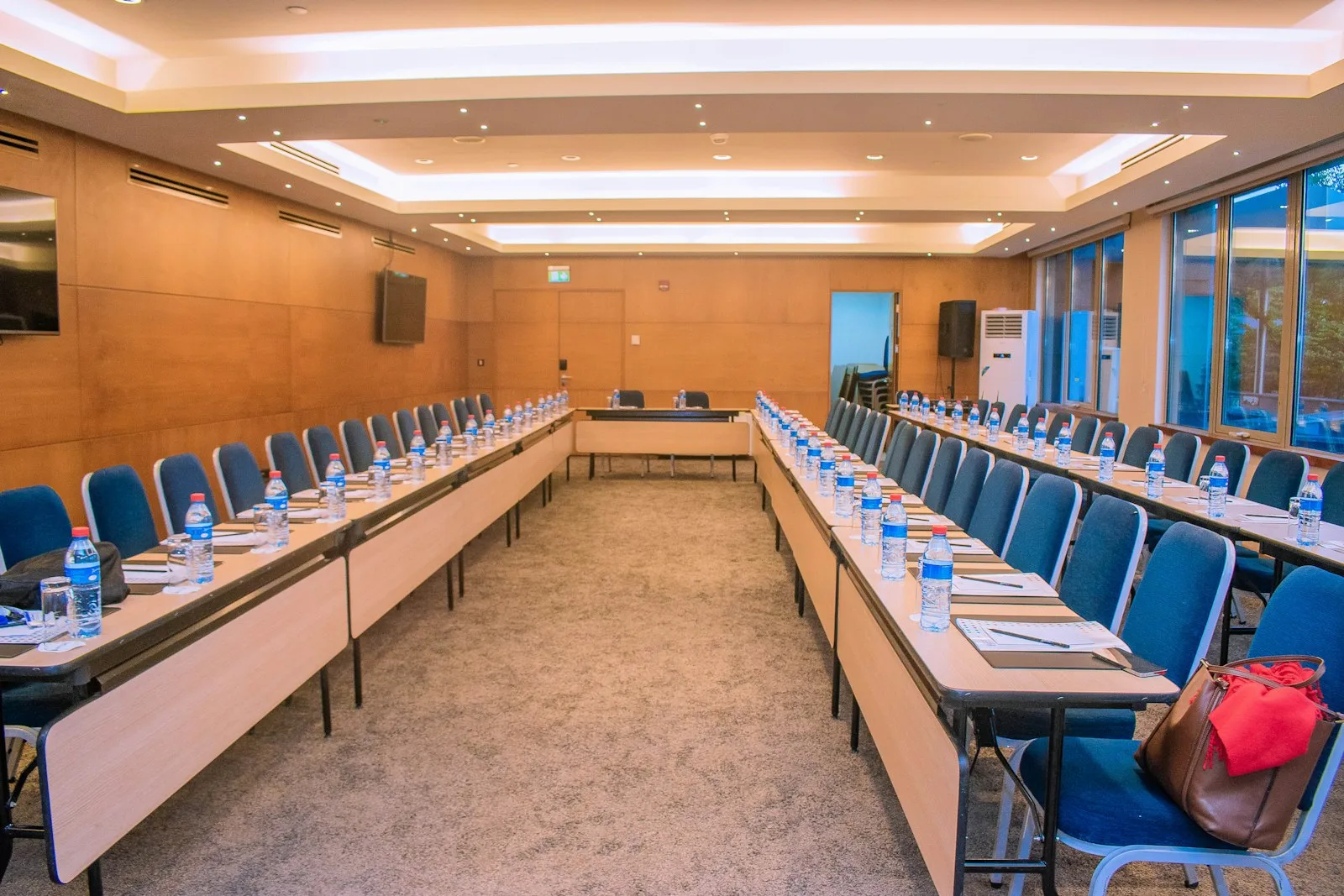
The offsite ends on a Thursday. By the following Thursday, about 20% of it remains, and without structured follow-up 75% of managers show no measurable improvement at all (Brandon Hall Group). The first 66 days after the room empties decide whether that offsite was an investment or an expense. This is the framework for those days: five decisions to make before anyone leaves, a week by week cadence, and the three ways it usually falls apart.
Most offsites end with energy, a photo, and a shared document nobody opens again.
The agenda covered two days. Nobody wrote the agenda for day three.
Quick answer
Run something daily for 66 days, give the manager a scripted role in it, and measure behavior from week two. Before people leave the room, decide five things: the one or two behaviors you are actually changing, what each looks like on an ordinary Tuesday, who owns the day after, what gets measured in week two, and the date the window closes. The habit research puts automaticity at a median of 66 days (Lally et al., UCL), which is why the window is 66 days and not two weeks.
Key takeaways
- The last twenty minutes of the offsite matter more than the first two days. That is when the five decisions get made, or do not.
- Name behaviors, not themes. "Better communication" cannot be practiced. "Ask one question before offering a solution" can.
- The manager is the whole delivery system. Five short moments across 66 days, scripted, is the entire ask.
- Measure in week two, not quarter two. Commit rate, completion of commitments, stories shared.
- 66 days, not 14. A median of 66 days to automaticity, up to 254 for harder behaviors (Lally et al., UCL).
Before anyone leaves the room
Block the last twenty minutes of the agenda for this. It is the highest leverage twenty minutes of the entire offsite.
| Decision | What good looks like |
|---|---|
| The behaviors | One or two, not nine. Written as actions a person performs, not qualities a person has |
| The Tuesday test | For each behavior, one sentence describing what it looks like on an ordinary Tuesday with no crisis on |
| The owner of the day after | A named person, not a committee and not "L&D will follow up" |
| The week two metric | What will be reported fourteen days from now, and to whom |
| The close date | A calendar date, 66 days out, when the window ends and the stories get told |
If you cannot fill in all five rows before people stand up, the offsite is not finished yet.
The Tuesday test is the one most programs skip, and it is the one that does the most work. "Empower your team" fails it. "When a report brings you a decision they could make themselves, hand it back with one question" passes it, because a person can do that today and know whether they did.
The first 66 days, week by week
| When | What runs | Who owns it |
|---|---|---|
| Day 1 after | Kickoff huddle: the manager names the behavior and says why now, in their own words | Manager |
| Days 1 to 66 | One small action a day, two minutes, ending in a commitment | The daily layer |
| End of week 1 | First pulse: how many people committed, how many completed | Day after owner |
| Week 2 | First report to the sponsor: commit rate, completion, early stories | Day after owner |
| Every 2 weeks | A short manager message, written for them, keeping the initiative audible | Manager |
| Around day 33 | Midpoint one to one: what is working, what is stuck | Manager |
| Throughout | Recognition cascade, so early movers are visible to everyone else | Manager |
| Day 66 | Close: the manager marks the window with the stories the campaign produced | Manager |
Total manager time across the window: minutes a week. That number matters, because the fastest way to kill follow-through is to hand a manager a second job.
Why the manager is the delivery system
Gallup finds 70% of the variance in team engagement traces to the manager. Whatever the offsite taught, the manager sets the conditions it has to survive in.
The three gaps that open the day after are motivation, environment and communication, and all three have the same owner. The longer argument is in The Manager Multiplier.
Which is why the five moments above are scripted rather than requested. "Please reinforce the training with your teams" produces nothing. A written message with a send date produces a message.

What to measure, starting week two
The lagging numbers, turnover and engagement and NPS, take quarters. Waiting for them is how programs die between budget cycles.
Three leading indicators move in weeks and predict the lagging ones:
| Indicator | The question it answers |
|---|---|
| Commit rate | Are people saying yes to a specific action |
| Completion of commitments | Are they doing what they said |
| Stories shared | Did it matter enough to tell someone |
Report them by segment rather than as an average. Any population sorts roughly 20/60/20, and an average across all three hides the only group that decides the outcome, which is the middle 60%. That argument is in The 20/60/20 Rule, and the full measurement method is in How to Measure Leadership Behavior Change.
The three ways this fails
The behaviors stayed abstract. Nobody can practice "be more strategic." If the Tuesday test was skipped, everything downstream is theater.
Nobody owned the day after. The most common version: L&D assumes the managers will carry it, the managers assume L&D will send something, and the calendar quietly reclaims the time by Wednesday.
The only measurement was the last day survey. High scores from a room that enjoyed itself, which tells you nothing about Tuesday. Completion is a vanity metric; it measures the room, not the job.
The proof that the window works
| Organization | What ran after the program | Result |
|---|---|---|
| A global professional services firm | A six month behavior sprint after a multi-day workshop for 1,500 leaders | 91% enrolled voluntarily; 96% of commitments made were completed |
| Romano's Macaroni Grill | Managers in half the restaurants ran a campaign, compared against the rest | Manager turnover cut 60% year over year; 72% improved on every measured behavior |
| JetBlue | Front line supervisors across six airports | Leadership nominations up 91% |
| PPG | Cohort workshops led by internal trainers, then a daily layer | Self reported gains of 89% on positive interactions, 85% on encouraging innovation |
The independent read on the mechanism is the Claremont Graduate University field study (Felkey et al. 2021): 136 employees, daily prompts each ending in a commitment, a 64% check in rate against a 41% industry average, p < .001, and NPS up 15% in the first 30 days. Check in and NPS were measured directly; wider organizational outcomes were extrapolated.
How ProHabits runs the 66 days
ProHabits is the reinforcement layer that runs after the offsite. The behaviors you named in that last twenty minutes become the daily actions.
One MicroAction a day, by email or text, no app and no login: a question, evidence with a named source, one action for today, an optional resource, and the I commit button. Thirty seconds. The commit button is the implementation intention that research puts at a 2 to 3x effect on follow-through across 94 studies (Gollwitzer).
The five manager moments are written for them and timed across the window. The dashboard reports commit rate, completion and stories by segment, so the week two report writes itself.
90% of training vanishes in a week. ProHabits makes it stick.
The full argument, with the day after framed as the product, lives here:
The Day After Leadership Training
Keep reading
- The Day After Leadership Training, the cornerstone
- The Manager Multiplier, on who carries the window
- The Science of 66 Days, on why 66
- How to Measure Leadership Behavior Change, on the week two report
- Daily Leadership Habits: What Research Says Works, on the daily unit
- The 20/60/20 Rule
Two next steps
Bring us the behaviors from your last offsite and we will show you the 66 days that should have followed it, or build the campaign now.