How to Make Leadership Training Stick: The Middle 60% Nobody Designs For
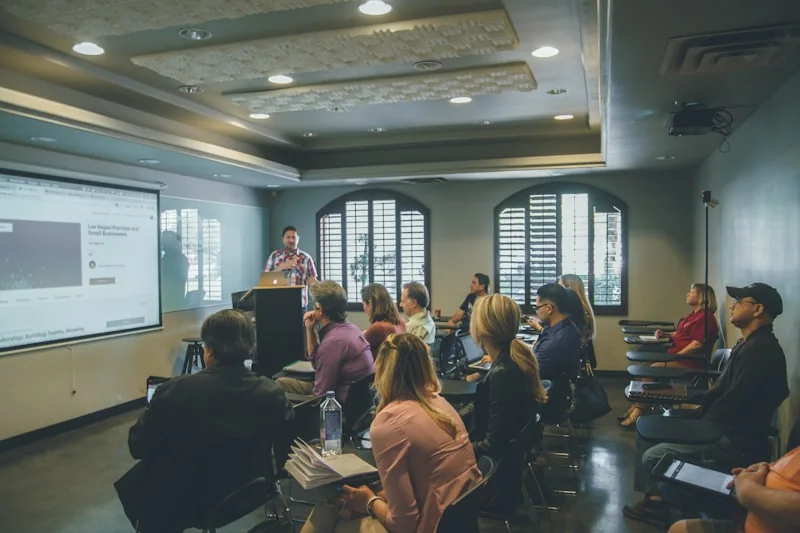
It's the Monday after the offsite.
Your leaders spent two days in a hotel ballroom. The facilitator was good. The scores came back high. Somebody got emotional during the values exercise.
Now they are back at a desk with 400 unread emails and a forecast call at eleven.
By Friday, most of it will be gone.
The workshop was never the problem. The problem is that nobody owns the week after it.

Quick answer
Leadership training sticks when the behavior gets prompted inside the actual workday and a manager notices when it shows up. Roughly 70% of what people learn is forgotten without reinforcement, and habits take a median of 66 days to form, so a two day event was never going to survive on its own. Across our benchmarking dataset of about 40,000 participants, the number that predicts whether a program changes behavior is not attendance and not completion. It is commitment.
Key takeaways
- Every rollout splits roughly 20/60/20. About 20% run with it alone, about 60% start and stall, about 20% will not engage yet. The middle 60% is where programs are won or lost.
- Commitment is the bottleneck, not follow through. In our data, 19% of participants commit to a given action. Of those who commit, 90% complete it. People are not flaky. They are unprompted.
- The manager is the multiplier. Gallup attributes about 70% of the variance in team engagement to the manager. Reinforcement that skips the manager is leaving most of the effect on the table.
- Measure the middle, not the average. An average completion rate hides the only movement that matters.
The 90% that disappears
Start with the uncomfortable part.
Research on the forgetting curve puts retention loss around 70% without reinforcement. Habit formation research puts the median habit window at 66 days, and as long as 254 days for harder behaviors.
Compare that to how leadership programs are actually built. Two days. Sometimes three. Then a survey, and a gap until the next cohort.
There is nothing wrong with the workshop. The room does what the room is good at: it creates intent. What almost no program builds is the thing that carries intent into a Tuesday.
That gap has a name in the research. The intention gap, the distance between what people mean to do and what they do, runs somewhere between 18 and 28%.
Translation: even the people who genuinely want to change mostly will not, unless something in the workday prompts them.
The 20/60/20 split
Every rollout we have run splits about the same way.
| Group | Share | What they do | What they actually need |
|---|---|---|---|
| Habiteers | ~20% | Run with it on their own | Nothing. They would have changed anyway |
| Motivables | ~60% | Start, do two or three days, then stall | A prompt inside the workday and a manager who notices |
| Disengaged | ~20% | Do not engage yet | A different conversation, not more reminders |
We are not the only ones who see this shape. Gallup's engagement split lands at 20/64/16. Rogers' diffusion of innovation curve lands at 16/68/16. Prochaska's stages of change land at 20/40/40.
Four different research traditions, four different methods, roughly the same middle.
If your program only works for people who were going to change anyway, you did not run a program. You ran a filter.
The Motivables are the whole job. They are not resistant. They are busy.

The number nobody publishes
Here is what our benchmarking dataset shows across roughly 40,000 participants and more than 4 million MicroActions delivered.
| Stage | Benchmark | What it tells you |
|---|---|---|
| Enrollment | 62% | Most people will opt in when the ask is small |
| Commitment | 19% | Only about one in five commits to a specific action |
| Completion | 90% | Almost everyone who commits actually does it |
| Story | 11% | About one in nine tells you what happened |
Benchmarks as of June 2026, aggregated across 200+ organizations. Figures are approximate and vary by approach and sponsorship.
Look at the gap between those middle two rows.
Nineteen percent commit. Ninety percent of those finish.
Most L&D teams read a low number like 19% as a motivation problem. It is not. If it were a motivation problem, completion would also be low. Instead, once someone says "I commit," they follow through nine times out of ten.
That is the finding, and it inverts how most programs are designed. The industry optimizes for attendance and then reports completion. Both numbers are downstream. The lever is the moment of commitment, and almost nobody designs for it.
There is a reason it works this way. Committing to a specific action at a specific time is what the behavioral science literature calls an implementation intention, and it is one of the more reliable effects in the field. The commitment is not a formality. It is the intervention.
The manager is the multiplier
The second lever is the one most reinforcement tools skip entirely.
Gallup attributes roughly 70% of the variance in team engagement to the manager. Their data also shows 61% of employees engaged when they get weekly feedback, against 38% when they do not. Separately, 52% of voluntarily exiting employees say their manager could have prevented it.
So the manager is the highest leverage surface in the building. And yet the standard post workshop package hands the employee a workbook and hands the manager nothing.
What we have seen work is narrow. Give the manager one thing to watch for this week. Not a dashboard. Not a coaching certification. One observable behavior, named in advance, that they can notice and acknowledge in thirty seconds.
At Romano's Macaroni Grill, managers ran this pattern against turnover. Year over year manager turnover came down 60%, hourly turnover came down 4%, and 72% of surveyed managers improved on every behavior measured, including recognition, feedback, encouraging innovation and empowered decision making.
At a global professional services firm running a three year leadership rollout across 1,500 leaders, 91% enrolled voluntarily and 96% of the commitments people made were completed.
Neither of those came from a longer workshop.
Micro asset: the one line that moves the middle
If you do nothing else from this post, put this in front of your managers on the Monday after your next program.
This week, watch for one thing: the specific behavior your program taught.
When you see it, say what you saw. Not "great job." Name the action.
Example: "You brought the agenda a day early and it changed how the meeting ran."
That is the entire intervention. One behavior, named in advance, acknowledged in the open.
The reason it works is not motivational. It is that specific recognition tells the whole team what good looks like, and it takes a manager under a minute on a day when they have no minutes.
What to do this week
- Pick one behavior from your last program. Only one. The one you would actually defend to a CFO.
- Write it as an action someone could do in two minutes on a normal Tuesday. If it takes planning, it is too big.
- Give your managers the one line above, in writing, before the week starts.
- Track three numbers: how many committed, how many confirmed they did it, and whether managers noticed a change by Friday. The third one is the one your CFO will care about.
- Ignore your average. Look at whether the middle 60% moved.
FAQ
How long does it actually take for a new leadership behavior to stick?
The research puts the median habit window at about 66 days, and up to 254 days for more complex behaviors. That is well beyond the length of any workshop, which is the structural reason reinforcement matters more than program design.
Is low commitment a sign that people do not care?
Usually not. In our data, completion runs about 90% once someone commits. That pattern points to an absence of prompting rather than an absence of will.
What should we measure if not completion rates?
Three things: commitment count, confirmed completion, and whether managers observed a change. Completion alone looks impressive and tells you very little, because it only describes the people who already committed.
Does this replace our leadership program?
No. It is the layer after it. The workshop creates the intent. Reinforcement is what carries the intent into the workday.
Where does the 20/60/20 split come from?
It is the pattern we see across rollouts, and it converges with Gallup's engagement split, Rogers' diffusion curve and Prochaska's stages of change. The full breakdown is in the 20/60/20 field report.
The bottom line
Your program probably worked. The room did its job. What is missing is the part nobody owns, which is the five days after everyone goes back to their desk.
Do not start by buying anything. Start by picking one behavior, writing it as a two minute action, and giving your managers one thing to watch for. Then look at whether the middle 60% moved. If it did, you have found the actual lever. If it did not, you now know where the program is leaking, which is more than most teams can say.
If you want to see what this looks like mapped to a program you are already running, you can build a sample campaign in about 90 seconds. No login, no email required.
This post is for informational purposes only. Benchmarks are aggregated across client rollouts as of June 2026, are approximate, and vary by approach and executive sponsorship. Third party research is cited for context and is not a performance guarantee.
Related reading: The 20/60/20 Rule field report · The science behind MicroActions · Client outcomes